


Quintet Art Event
Rethinking art advisory through a humanist lens
What you need to know
- Art collections are living assets with their own life cycle: proper management starts at acquisition and requires ongoing inventory, updated valuations, insurance policies and careful physical conservation to preserve and transfer value across generations.
- Failing to involve heirs in collection management creates serious risks — including fragmented legacy, tax inefficiencies, financial losses and family conflict. Integrating art into the broader wealth structure, like any other asset, is essential for sound succession planning.
- The right art advisory expertise can turn potential family disputes into positive outcomes: from lending masterpieces to world-class museums to unlocking hidden auction value, structured collections consistently outperform unmanaged ones.
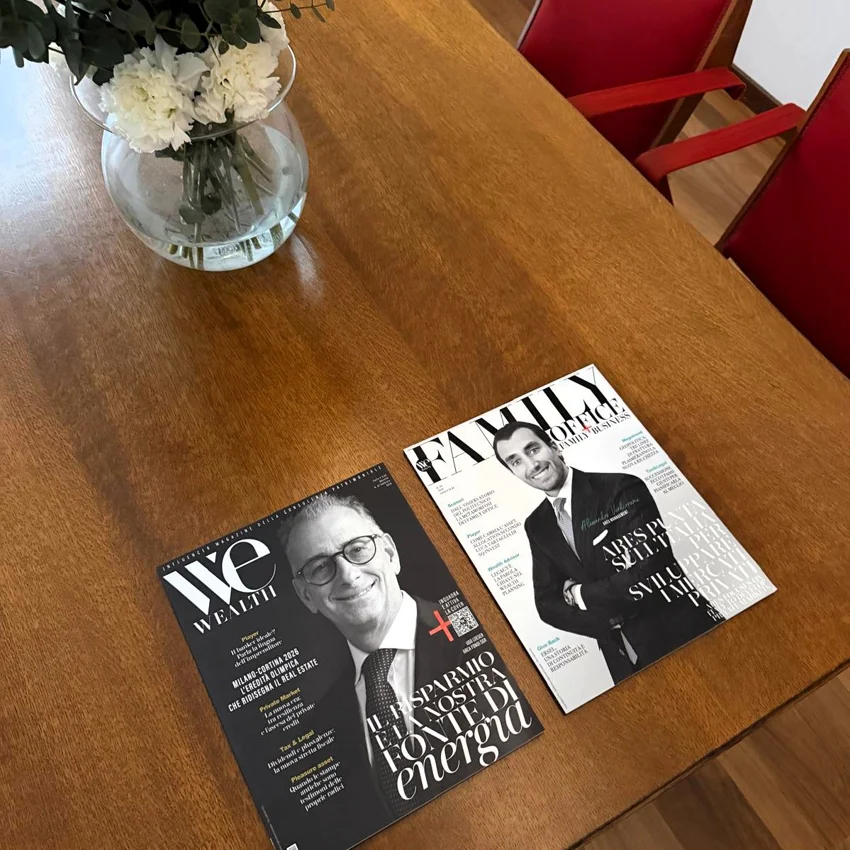
This page presents an English translation of an article originally published in Italian by We Wealth on 20 March 2026. The original article can be found here: Metti una sera a cena (per un'art advisory umanista. Quintet Private Bank is not the author of the original piece. The translation below is provided for informational purposes only.
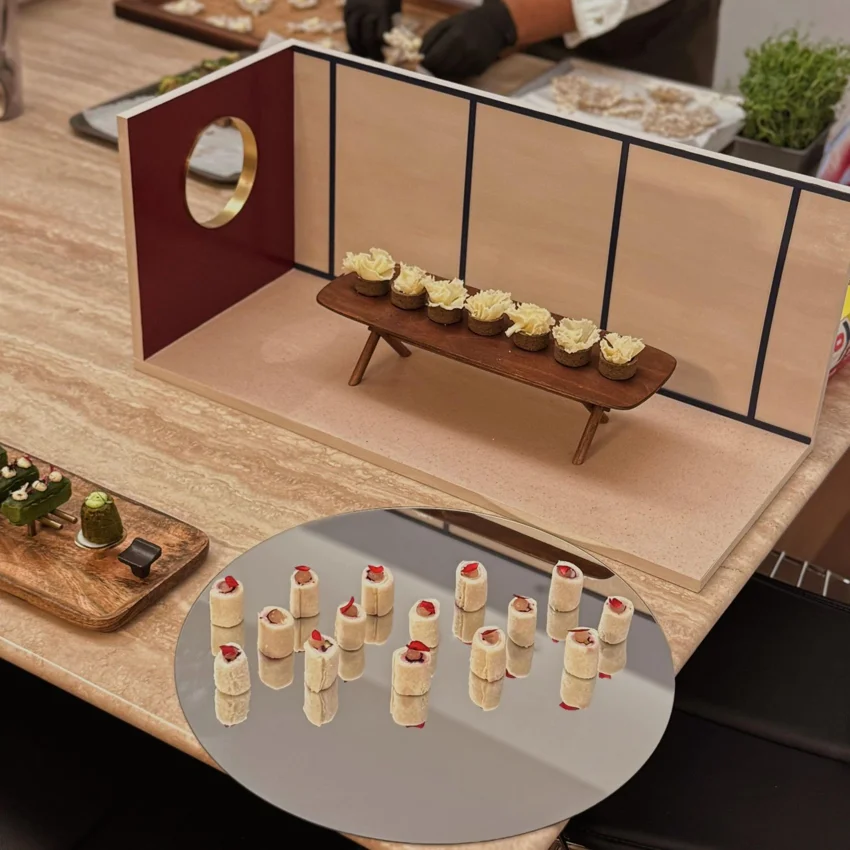
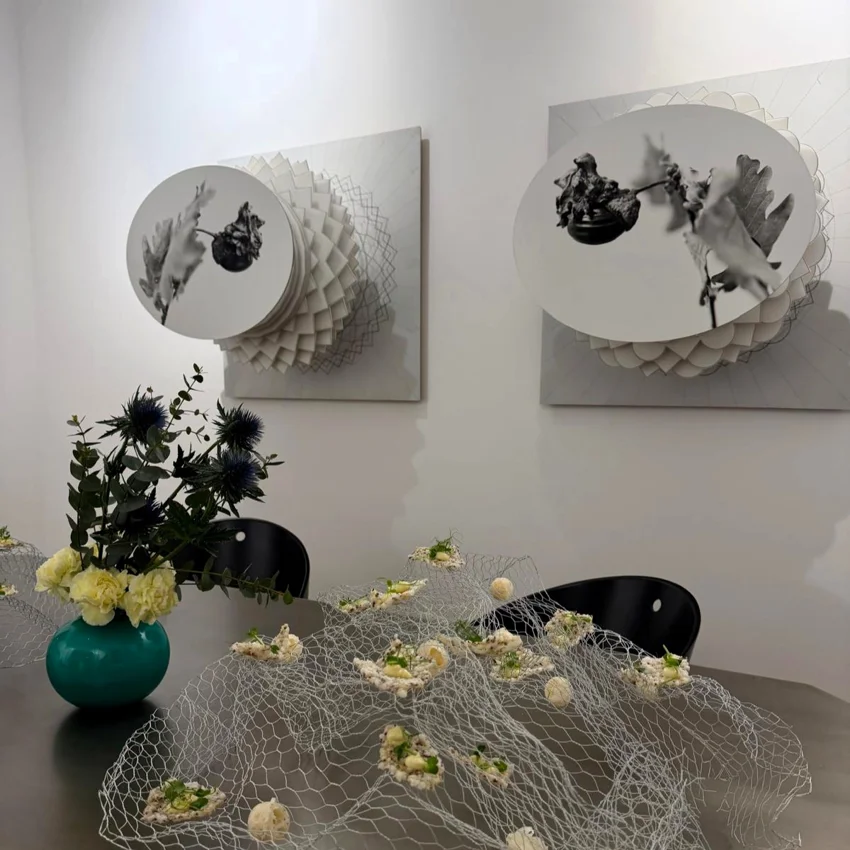
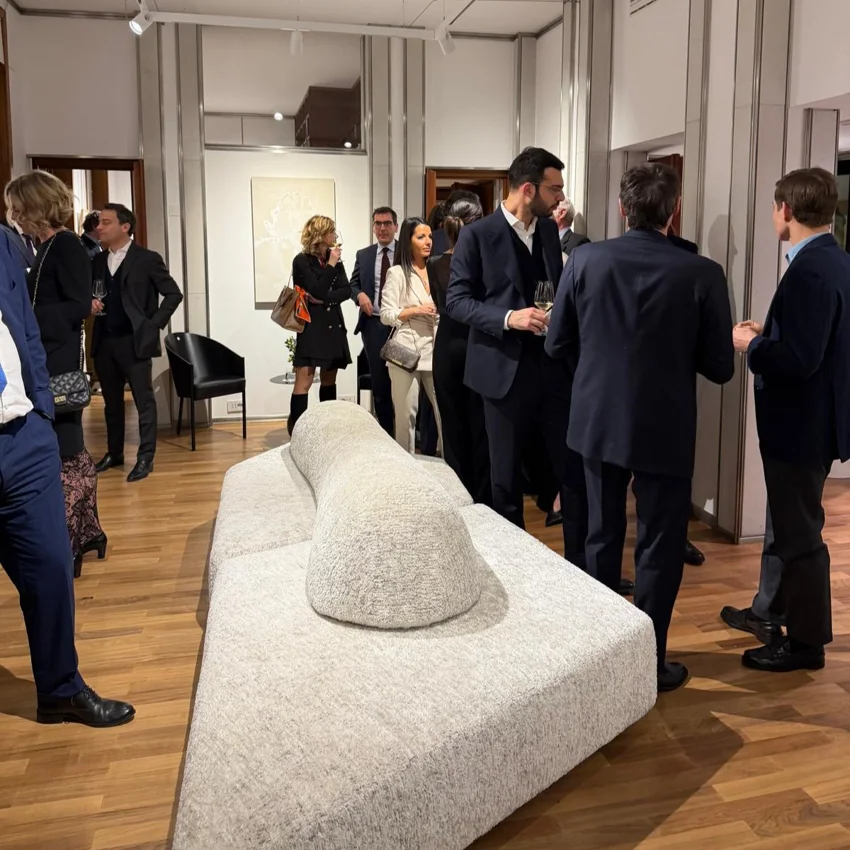
In early March, the exclusive Milanese residence Casa Gregotti hosted Quintet Private Bank’s Private Art Dinner. During the evening, art was discussed as a fundamental element of wealth architecture and as a surprisingly powerful facilitator of family continuity.
The discretion and elegance of an iconic Milanese residence. The expertise and connoisseurship of an international private bank with European roots. Casa Gregotti and Quintet Luxembourg: a truly perfect pairing.
Headquartered in Luxembourg, the private bank specialises in bespoke wealth management, investment management, and individual and family succession planning, as explained during the Private Art Dinner organised by We Wealth and Quintet at the prestigious Milanese residence in early March 2026.
Quintet Private Bank and its rigorous, humanist approach to art advisory
During the closed-door event, a conversation took place between We Wealth and Sophie Clauwaert, art historian, advisor and specialist in private collections at Puilaetco | Quintet Private Bank. Clauwaert’s approach—while grounded in strong academic rigour—can be described as decidedly “humanist”.
Almost “a living being”
This becomes immediately apparent when speaking with her: for Clauwaert, a collection—almost like a living organism—has its own life cycle, which must be respected as such.
“A collection is living heritage; it evolves over time and cannot be reduced to a series of isolated purchases,” she explains. “The life of a collection already begins at the moment an artwork is acquired. It is an intentional act,” one that carefully considers provenance, authenticity, coherence, and price context.
The optimal management of a collection
Acquisition is therefore followed by the structuring of the collection through a proper inventory, with continuous updates of valuations and insurance policies, without neglecting optimal physical conservation (for example, “avoiding storing works on paper in full light”), while also gathering all relevant documentation.
Optimal management of the life cycle of an art collection (and beyond) is the cornerstone of its enhancement and intergenerational transfer.
Involving the next generations
However, even excellent management alone is not sufficient. Sophie Clauwaert stresses the importance of involving heirs in the management of the collection to ensure a smooth and harmonious succession process. The collection must be consistently integrated into the broader wealth structure, like any other asset.
Wealth risks arising from failing to involve heirs in the management of a collection
Underestimating the importance of integrating artworks into family heritage from the outset can lead to fragmentation of the family’s historical legacy, ambiguous valuations, tax inefficiencies, financial losses, emotional tensions among heirs and, in extreme cases, real wealth catastrophes. Proper knowledge of one’s collection makes it possible to design “a governance structure aligned with one’s overall wealth architecture”.
Real-life examples from Quintet Private Bank’s experience in art advisory
As Sophie Clauwaert reiterates, it is essential that decisions be made “with clarity. A collection without structure is fragile, exposed to high risks both financially and relationally.” Real-life examples abound. One may encounter castles filled with inherited artworks that are uncatalogued and completely lacking documentation relating to their acquisition and provenance. The consequence is an inevitable loss of value and dispersion of the collection through various auction houses at discounted prices.
Conversely, proactive structuring of a collection can yield pleasant surprises, even when initial expectations are modest.
Pleasant surprises
This may occur when heirs discover works by Magritte or other “weighty” names such as Picasso, Monet or Van Gogh—situations that are not uncommon, particularly in Belgium, which “has the highest number of collectors per capita, according to a study,” reveals the art historian. A typical dilemma then arises: hang it or not? For security reasons, some choose to store masterpieces in warehouses, risking alienation of younger heirs who may never have shared in the memory of the works.
Into this kind of “emotional void” (or apparent one) steps the sensitivity and expertise of an art advisor like Clauwaert. By facilitating dialogue between generations, she has managed to “strike the right chords,” revealing and gaining appreciation for solutions previously unconsidered—such as lending works to the “most important Belgian museum dedicated to that artist” (the Magritte Museum), which is renowned for its careful and high-quality communication practices.
The right art advisory expertise can therefore help resolve potential family conflicts while enhancing the family’s identity and perceived value. Another “happy ending” involved the rediscovery of a painting by Belgian artist James Ensor (1860–1949), made possible thanks to the orderly management of the collection and the richness of its supporting documentation. In this case, although the heirs were interested in keeping the painting, it was decided to proceed with an (excellent) auction sale: the oil painting was worth far more than the rest of the collection, and “it was not possible to divide the painting into three,” notes Clauwaert. Once again, a well-managed collection bore fruit.
From a momentary passion to eternity
A collection is born out of passion, but its continuity depends on vision, responsibility and structure. “As advisors,” concludes the Quintet expert, “we have a major role to play in the great wealth transfer, helping ‘private passions’ become lasting stories of family continuity.” Families carefully structure businesses and financial portfolios, yet often overlook art in succession planning. And yet art is not only an asset of passion; it is also a powerful form of financial, emotional, identity-based and cultural capital.
The evening concluded with the shared understanding that managing, protecting and transmitting a collection means preserving one’s heritage—and one’s history. And, in a sense, granting it eternity.

Disclaimer
The information contained in this article is provided exclusively for general informational purposes and is intended for residents of Italy only insofar as Quintet Private Bank is duly authorised to provide services in Italy under its European passporting licence. Art-related considerations may involve significant risks, including market, liquidity, valuation and provenance risks, and may not be suitable for all investors. Nothing in this publication should be construed as an invitation, recommendation or offer to buy or sell any financial product or service, nor as personalised investment, legal, tax or other professional advice. Readers remain solely responsible for decisions made based on this information. Users are required to comply with applicable Italian regulations.