



What matters to you in 30 seconds
-
Investors are becoming more sensitive to risks that were easier to overlook when markets were rising, from the financing of AI investment to government debt and political uncertainty.
-
This is creating greater differences between companies, sectors and countries, rather than a broad retreat from markets.
-
We still see reasons to be positive about markets but think this is the time to ask tougher questions about where the risks are, and which are worth taking.
Chart of the weeK
Source: In-house research, Bloomberg




Investors are looking more closely at what lies beneath
The global economy remains resilient, but investors are finding more reasons to look beneath the surface.
Last week offered several examples. Questions about the growing use of debt to finance AI infrastructure weighed on technology shares. Renewed attacks in the Middle East pushed Brent crude above USD 115 a barrel. And in France, political uncertainty added to longstanding concerns about the country's public finances.
These may appear to be separate issues, but the market response points to a common theme. Investors are becoming more selective about where they are prepared to take risk.
In equity markets, some investors took profits in technology, semiconductor and AI infrastructure companies, while money moved towards healthcare, consumer staples and financials. We don’t see this as a retreat from equities. It’s more that the questions being asked are becoming more demanding as the AI investment cycle has grown more capital intensive: how will all this investment be financed, and what returns will ultimately be needed to justify today's valuations?
A similar distinction is emerging between countries.
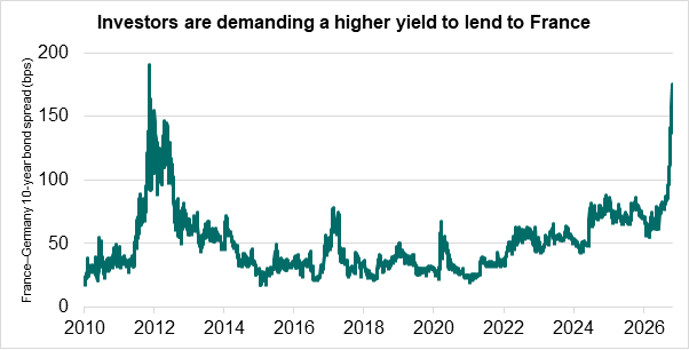
France has been particularly exposed as political uncertainty compounds concerns over its fiscal position. French equities underperformed, while its government bonds came under considerable pressure. The French 10-year yield rose above 5% and the gap with equivalent German bonds widened to around 170 basis points, levels not seen in decades. Meanwhile, demand for US Treasuries and German Bunds remained relatively well supported.
The common thread is credibility. Whether investors are considering an ambitious corporate investment programme or a government's finances, they are paying closer attention to how spending is funded and whether the prospective returns or economic outlook justify the risks involved.
Positive but selective on markets
The global economy continues to show resilience and the long-term investment cycle associated with AI remains supportive for growth and company earnings. That is why we continue to favour equities over bonds.
Recent market moves do, however, reinforce the case for being selective about where we take risk. We have been adjusting portfolios as these risks have evolved. We reduced our exposure to European equities earlier this year and, more recently, moved to a neutral position in European government bonds as fiscal and political concerns in France increased. At the same time, we have sought to preserve opportunities for growth while building in greater resilience, including through equity warrants in eligible portfolios and reduced exposure to US corporate credit.
We therefore remain positive on markets, while recognising that an environment of higher oil prices, political uncertainty and rising financing needs is likely to produce clearer distinctions between winners and losers.
This week
A difficult choice for central banks
The same forces making investors more selective are also making life harder for central banks.
Oil above USD 112 keeps inflation firmly in the conversation. At the same time, higher bond yields and geopolitical uncertainty risk can weigh on economic growth. For the US Federal Reserve (Fed) and European Central Bank (ECB), that makes the next interest-rate decision less straightforward.
We do not expect either central bank to raise rates this week. For the Fed, attention is likely to turn instead to how it balances these competing risks and whether another increase could still come before the end of the year.
The ECB has another reason to be patient. Rising Eurozone bond yields have already tightened financial conditions, particularly in France. We therefore expect it to wait until December, when updated economic forecasts should provide a clearer picture of inflation and growth. We also think direct intervention in French bond markets remains very unlikely.
So, investors may learn more this week from the way central banks describe these risks than from the decisions themselves.
This week will also deliver the quarterly earnings results for large tech companies such as Microsoft, Alphabet and Amazon. Collectively, they should give a good read on the question currently dominating markets: is the extraordinary AI capex cycle translating into sufficient revenue and earnings growth?