

What does oil at USD100 mean for investors?
6 mins to read this article
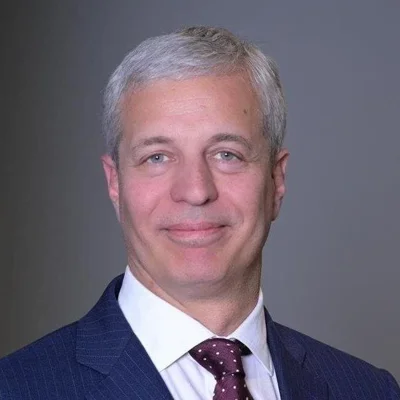
Daniele Antonucci
Daniele Antonucci is a managing director, head of investment and chief strategist at Quintet Private Bank. Based in Luxembourg, he chairs the investment committee, owning performance outcomes, and has responsibilities across research and strategy, asset allocation, portfolio management and investment communications.
Daniele’s work brings together global macro strategy with investment decision-making and thought leadership. He leads specialists across asset classes and solutions, and formulates and communicates investment views and the economic and market outlook to financial advisors, clients, senior stakeholders and the media.
Daniele joined Quintet in 2020 as chief economist and macro strategist, subsequently becoming co-head of investment and chief investment officer. He previously served as chief euro area economist at Morgan Stanley in London, having also gained international experience with other global investment banks, helped deliver strategic partnerships with leading asset managers such as BlackRock, and held positions at economic consultancies, rating agencies and think tanks.
Daniele completed the High Performance Leadership Programme at Saïd Business School, University of Oxford, earned a master’s degree in economics from Duke University and graduated from Sapienza University of Rome. A lecturer at the Luxembourg School of Business, he is a published author in economics journals, a frequent contributor to global investment media, a speaker on CNBC and Bloomberg TV, and an ECB Shadow Council member.

What matters to you in 30 seconds:
- Oil prices briefly reached USD100 per barrel following renewed US-Iran tensions, raising inflation risks and increasing market uncertainty. While risks have risen, the base case remains that the conflict will not materially change the outlook for growth, inflation or interest rates.
- The ECB kept rates on hold and other major central banks are also expected to pause this week. Markets remain focused on whether higher energy prices lead to more persistent inflation and delay future rate cuts.
- To help manage rising geopolitical and inflation risks, we recently reduced equity exposure and increased allocations to government bonds and cash, leaving portfolios more balanced should market volatility increase.




Geopolitical risk
Renewed concerns but portfolio built for resilience
Last week, Brent crude oil prices hit USD100 per barrel as US-Iran strikes disrupted energy shipping in the Strait of Hormuz (they are currently at around USD90 per barrel). Concerns also increased around the Bab el-Mandeb Strait after Houthis threats to Red Sea shipping.
Higher oil prices are the most immediate economic risk because they can put upward pressure on inflation and reduce the scope for lower interest rates, which could weigh on equities. If oil prices stay elevated for a prolonged period, they could also become a drag on consumer spending, economic growth and equity markets.
That said, we believe the incentives for a prolonged conflict are relatively low. Since tensions re-escalated two weeks ago, President Trump’s approval rating has dipped further as national average gas prices have risen above USD4 per gallon. This does not bode well for the Republican Party ahead of the November 3 midterm elections. Polls currently show Democrats leading the general congressional ballot, and some prediction markets suggest the House of Representatives could flip to the Democrats. Iran is also still reliant on revenues from oil exports, which supports the importance of maintaining oil flows.
A new chokepoint in the Red Sea could add further upside pressure to oil prices and inflation. Renewed tariffs could do the same. The US has imposed new tariffs of 10-12% on 60 countries as the Administration reinstates the trade measures that the Supreme Court overturned earlier this year. However, we do not think central banks will react as swiftly as they did in 2022. This is because interest rates are already in neutral or restrictive territory and US tariffs are largely an extension of measures already due to expire on 24 July.
For investors, the key question is whether higher oil prices and renewed trade tensions will materially change the outlook for growth, inflation and interest rates. At this stage, we don’t believe they do. But the risks have increased. In that context, our recent move to modestly reduce equity exposure and increase allocations to government bonds and cash leaves portfolios better balanced should market volatility rise.
Monetary policy
ECB on hold for now
Last week, the European Central Bank (ECB) decided to hold policy rates at 2.25%, in line with market expectations. Christine Lagarde kept the door open to an increase later this year, while avoiding any commitment to a particular path for interest rates given lingering uncertainties. On the one hand, relatively weak economic data, such as easing wage growth, reduce the urgency for an immediate increase in rates. On the other hand, higher energy prices limit the scope for lower rates in the near term.
The debate is whether higher energy prices will lead to broader and more persistent inflation pressures. The ECB is waiting for further evidence of this before making a decision. In our view, assuming the US-Iran conflict doesn’t last too long, the subdued growth environment makes additional ECB rate hikes in 2026 unlikely.
Markets, however, still price in two quarter-point rate increases. This difference in expectations, together with the weak economic momentum, were among the reasons we increased our Eurozone government bonds holdings, funded by reducing European equities last month.
This week
Fed, BoE and BoJ to hold rates for now
This week, attention turns to the other side of the Atlantic. On Wednesday, the Federal Reserve (Fed) is expected to keep the policy rate in the 3.5% to 3.75% range. Before tensions re-escalated, Fed Chair Kevin Warsh stated that inflation risks had eased. Those comments may carry less weight now. Given the ongoing energy-related inflation risks and continued strength in the US economy, we expect the Fed to increase interest rates to 3.75% to 4% before year-end.
The Bank of England (BoE) reconvenes on Thursday and we do not expect it to raise the policy rate just yet. BoE officials have stressed that higher interest rates would not offset the impact of the energy shock on prices. Even so, we expect the Bank Rate to reach 4% by year-end if fiscal policy loosens with Andy Burnham as UK Prime Minister. Lastly, the Bank of Japan (BoJ) is also expected to keep interest rates on hold for now. However, following a rise in inflation in June, we expect the BoJ to increase its policy rate before year-end.
In terms of economic data, Thursday’s release is likely to show that US economic growth likely accelerated in the second quarter of 2026, supported by strong AI-related demand. In the Eurozone, we expect only a modest recovery, mostly driven by a rebound in volatile Irish data after the economy contracted in the first quarter.