

Drought and Low Water Levels: Are Climate Risks Becoming a Key Valuation Criterion?
5 mins to read this article
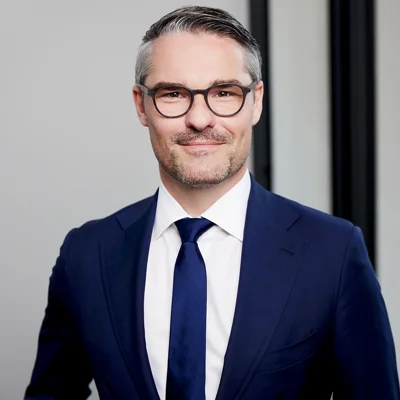
Marc Decker
Marc Decker is Co-Head of Direct Equities at Quintet Private Bank, based in Munich. Since joining the group in 2018, he has held several senior leadership positions and plays a key role in shaping the group’s equity investment strategy. In his current position, he oversees the management and ongoing development of the group’s equity model portfolios, with a strong emphasis on disciplined single‑stock selection and long‑term value creation across markets.
With more than two decades of investment experience, Decker brings deep expertise across equity and multi‑asset strategies. He began his career in 1999 as a portfolio manager at DWS in Frankfurt, before joining MEAG in Munich, where he worked as a multi‑asset portfolio manager. He later co‑founded Skalis Asset Management, an independent investment boutique specializing in multi‑asset solutions, and served as a member of its Management Board, combining entrepreneurial leadership with hands‑on portfolio management responsibility.
Decker is a CAIA Charterholder and holds a Diplom‑Betriebswirt (FH) degree in Business Administration from Frankfurt School of Finance & Management, equivalent to a Master’s degree. His investment approach is defined by rigorous analysis, strategic perspective and a strong commitment to delivering consistent outcomes for clients.

What you need to know
The water level of the Rhine has long ceased to be merely a weather story. For investors, it is increasingly becoming a risk indicator for European industrial companies. When Europe’s most important inland waterway is only partially navigable, transport costs rise, supply chains come under pressure, and profit margins can shrink faster than many valuation models currently anticipate.
At the center of the issue is the Rhine itself. The river connects the North Sea ports of Rotterdam and Antwerp with major industrial regions in Germany, France, and Switzerland. Particularly critical is the gauge at Kaub, a key bottleneck for inland shipping. When water levels there fall significantly, cargo vessels can operate with only a fraction of their normal capacity. In some cases, ships are restricted to carrying just 20% to 30% of their usual load. At present, there is even a risk of shipping operations being suspended altogether. For companies, this means greater reliance on rail and road transport, and consequently higher costs.
Chemicals and Basic Materials Particularly Exposed
Industries that depend on moving large volumes of raw materials and intermediate goods are especially vulnerable. These include chemicals, steel, construction materials, basic materials, and parts of the energy sector. Companies located along the Rhine, such as BASF and Lanxess, rely heavily on efficient and cost-effective inland shipping. When this transport route is disrupted, production schedules and delivery commitments come under strain.
This matters for investors because low water levels can have a direct impact on corporate earnings. Higher logistics costs, lower utilization rates, more expensive alternative transport options, and potential production disruptions all weigh on margins. The low-water crisis of 2018 demonstrated that such bottlenecks can have a meaningful impact on German industrial output.
Low Water Levels Could Prolong Inflation
A second consequence concerns inflation. Disrupted supply chains do not merely slow economic growth; they can also push prices higher. Coal, petroleum products, chemicals, construction materials, and scrap metal cannot easily be shifted to alternative modes of transport at short notice. At the same time, low river levels and elevated water temperatures can affect electricity generation, particularly at power plants that depend on river water for cooling.
In this way, low water levels act as a supply-side shock: production becomes more difficult while costs continue to rise. For central banks, this creates a particularly uncomfortable situation because higher interest rates cannot resolve logistical bottlenecks or replenish river levels. For investors, the risk increases that inflation remains elevated even as economic growth weakens.
Resilience Becomes a Valuation Metric
As a result, investors are beginning to view climate risks through a different lens. The discussion is no longer limited to ESG ratings or long-term decarbonization pathways. Increasingly, the key question is how resilient business models are to physical climate risks. Companies with vulnerable supply chains, limited pricing power, and high transport intensity are likely to face greater pressure.
Conversely, investors may place a higher premium on businesses with resilient supply chains, flexible logistics networks, stable cash flows, and strong pricing power. Companies capable of passing higher transportation or energy costs on to customers hold a clear advantage. Those that cannot may face margin compression and potentially higher risk premiums. In this sense, climate resilience is evolving into a central valuation criterion.
Investors Are Also Looking for the Winners
The story is not solely about risk. Climate adaptation is creating new opportunities as well.
In the short term, some logistics operators may benefit as freight shifts from waterways to rail and road networks. However, such opportunities are likely to be tactical and short-lived. More compelling long-term opportunities may be found among companies providing solutions that enable economies to adapt to a changing climate.
Water technology, pumping systems, water treatment, environmental monitoring equipment, irrigation technology, and pipeline infrastructure are all areas likely to attract growing amounts of capital in the years ahead. Europe will need to adapt to more frequent periods of drought and low water levels, requiring a different and more resilient infrastructure base.
The Rhine as an Early Warning Indicator
Ultimately, the Rhine is becoming an economic early warning indicator for investors. Its water level influences transportation costs, energy prices, industrial production, inflation, and corporate profitability. What was once viewed as an exceptional weather event is increasingly emerging as a structural risk for certain industries.
For investors, the implication is clear: climate risks are no longer merely a sustainability issue. They are becoming an increasingly important factor in valuation and asset allocation decisions.
This document is designed as marketing material. This document has been composed by Quintet Private Bank (Europe) S.A., a public limited liability company (société anonyme) incorporated under the laws of the Grand Duchy of Luxembourg, registered with the Luxembourg trade and company register under number B 6.395 and having its registered office at 43, Boulevard Royal, L-2449 Luxembourg (“Quintet”). Quintet is supervised by the CSSF (Commission de Surveillance du Secteur Financier) and the ECB (European Central Bank).
This document is for information purposes only, does not constitute individual (investment) advice and investment decisions must not be based merely on this document.
Whenever this document mentions a product, service or advice, it should be considered only as an indication or summary and cannot be seen as complete or fully accurate. All (investment) decisions based on this information are at your own expense and at your own risk. It is up to you to (have) assess(ed) whether the product or service is suitable for your situation. Quintet and its employees cannot be held liable for any loss or damage arising out of the use of (any part of) this document. All copyrights and trademarks regarding this document are held by Quintet, unless expressly stated otherwise. You are not allowed to copy, duplicate in any form or redistribute or use in any way the contents of this document, completely or partially, without the prior explicit and written approval of Quintet. See the privacy notice on our website for how your personal data is used (https://www.quintet.com/en-gb/gdpr).
The contents of this document are based on publicly available information and/or sources which we deem trustworthy. Although reasonable care has been employed to publish data and information as truthfully and correctly as possible, we cannot accept any liability for the contents of this document.
Investing involves risks and the value of investments may go up or down. Past performance is no indication of future performance. Any projections and forecasts are based on a certain number of suppositions and assumptions concerning the current and future market conditions and there is no guarantee that the expected result will ultimately be achieved. Currency fluctuations may influence your returns.
The information included is subject to change and Quintet has no obligation after the date of publication of the text to update or inform the information accordingly.
Copyright © Quintet Private Bank (Europe) S.A. 2026. All rights reserved. Privacy Statement